Posts

Showing posts with the label post translational modification

Note: Proteomic and Glycosylation Analysis of Biotherapeutic Proteins (hosted by -BRIC)
Image
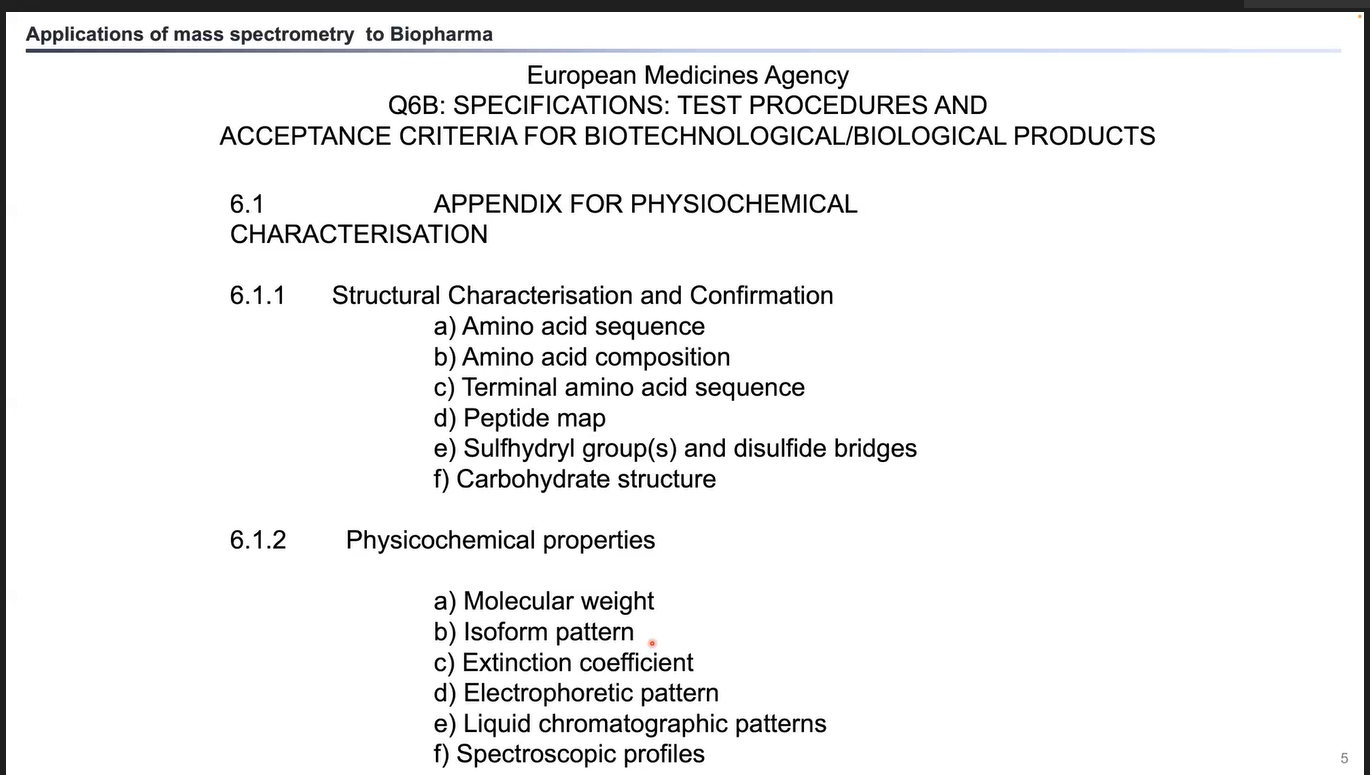
Note: Proteomic and Glycosylation Analysis of Biotherapeutic Proteins Webinar hosted by : Bioprocess Research and Innovation Centre (BRIC) Application of mass spectrometry to Biopharma https://www.ema.europa.eu/en https://www.ema.europa.eu/en/human-regulatory/research-development/scientific-guidelines/biologicals/biologicals-active-substance#manufacture,-characterisation-and-control-of-the-active-substance-section ตัวอย่างที่เขายกมาคือ monoclonal antibody ก็คือ ต้องโชว์ว่าโคลนตัวนี้สามารถที่จะผลิต protein ที่เหมือนกับ genetic materials หรือเปล่า และแต่ละลอตมีปัญหาหรือเปล่า สิ่งที่เราอ่านก็คือ peptide map แล้วเอามาเทียบกันในแต่ละลอต IgG – glycosylated protein – glycan on the protein must be characterized, depending on the cell types you are using – glycosylation pattern is very different in each cell type. Heterogeneity มี micro and macro Micro ต่างกันที่ side chain นิดเดียว Macro ต่างกันที่ pattern ที่ไป glycosylate เลย ขึ้นอยู่กับว่าเราจะดีเทคแบบไหน วิธีดีเทคแต่ละแบบก็จะ consume เวลา ...

Note for: ATM kinase: Much more than a DNA damage responsive protein

Note for: ATM kinase: Much more than a DNA damage responsive protein   (doi: 10.1016/j.dnarep.2015.12.009) It is a very large protein and post-translational modifications are the mechanism which ATM is regulated. Besides, one protein can either regulate ATM and be a downstream substrate of ATM! ATM has so many cellular roles not only DNA damage sensor. It can sense the redox status within the cell and the environment affects the structure of ATM which later control its activity! Sound to me, both ATM substrates and the proteins that control the ATM might be different in each cell type.  ATM -- multifunctional protein kinase during past two decades, established and predominant role in DNA damage response, to help in maintaining overall functional integrity of cells; oxidative stress, metabolic syndrome, mitochondrial dysfunction as well as neurodegeneration. several proteins which might be acting as substrates of ATM. effective regulatory controls within the...

Note: ATM, ATR, and DNA-PK: The Trinity at the Heart of the DNA Damage Response

Note for: ATM, ATR, and DNA-PK: The Trinity at the Heart of the DNA Damage Response doi: 10.1016/j.molcel.2017.05.015 Freaking complicated and so many gaps in the research as well as the available tool to elaborate precise mechanism. In general, a cell’s DNA damage response (DDR) involves DNA lesion recognition, followed by initiation of a cellular signaling cascade to promote DNA repair, which can be aided by a pause in cell-cycle progression (checkpoint activation). In concert with such events, cells mediate other responses, including modulation of chromatin structure and transcription, both at sites of DNA damage and more globally. DNA damage permanently exit the cell cycle (senescence) or undergo programmed cell death (apoptosis), presumably to mitigate the propagation of potentially mutated cells leading to cancer or other age-related pathologies. DNA lesions also serve as intermediates in certain biological processes, such as DNA demethylation, meiotic recombina...